The Qayen earthquake, also known as the Ardekul or Qaen earthquake, struck northern Iran's Khorasan Province in the vicinity of Qaen on May 10, 1997, at 07:57 UTC (12:57 local time). The largest in the area since 1990, the earthquake registered 7.3 on the moment magnitude scale and was centered approximately 270 kilometers (170 mi) south of Mashhad on the village of Ardekul. The third earthquake that year to cause severe damage, it devastated the Birjand–Qayen region, killing 1,567 and injuring more than 2,300. The earthquake—which left 50,000 homeless and damaged or destroyed over 15,000 homes—was described as the deadliest of 1997 by the United States Geological Survey. Some 155 aftershocks caused further destruction and drove away survivors. The earthquake was later discovered to have been caused by a rupture along a fault that runs underneath the Iran–Afghanistan border. (Full article...)
Image 3
Flowers, also known as blossoms and blooms, are the reproductive structures of flowering plants. Typically, they are structured in four circular levels around the end of a stalk. These include: sepals, which are modified leaves that support the flower; petals, often designed to attract pollinators; male stamens, where pollen is presented; and female gynoecia, where pollen is received and its movement is facilitated to the egg. When flowers are arranged in a group, they are known collectively as an inflorescence. (Full article...)
The red-tailed black cockatoo (Calyptorhynchus banksii) also known as Banksian- or Banks' black cockatoo, is a large black cockatoo native to Australia. Adult males have a characteristic pair of bright red panels on the tail that gives the species its name. It is more common in the drier parts of the continent. Five subspecies are recognised, differing chiefly in beak size. Although the more northerly subspecies are widespread, the two southern subspecies, the forest red-tailed black cockatoo and the south-eastern red-tailed black cockatoo are under threat. (Full article...)
Image 7
Lentiviral delivery of designed shRNAs and the mechanism of RNA interference in mammalian cells RNA interference (RNAi) is a biological process in which RNA molecules are involved in sequence-specific suppression of gene expression by double-stranded RNA, through translational or transcriptional repression. Historically, RNAi was known by other names, including co-suppression, post-transcriptional gene silencing (PTGS), and quelling. The detailed study of each of these seemingly different processes elucidated that the identity of these phenomena were all actually RNAi. Andrew Fire and Craig Mello shared the 2006 Nobel Prize in Physiology or Medicine for their work on RNAi in the nematode worm Caenorhabditis elegans, which they published in 1998. Since the discovery of RNAi and its regulatory potentials, it has become evident that RNAi has immense potential in suppression of desired genes. RNAi is now known as precise, efficient, stable and better than antisense therapy for gene suppression. Antisense RNA produced intracellularly by an expression vector may be developed and find utility as novel therapeutic agents. (Full article...)
The first homosexual movement thrived in Germany from the late nineteenth century until 1933. The movement began in Germany because of a confluence of factors, including the criminalization of sex between men (Paragraph 175) and the country's relatively lax censorship. German writers in the mid-nineteenth century coined the word homosexual and criticized its criminalization. In 1897, Magnus Hirschfeld founded the world's first homosexual organization, the Scientific-Humanitarian Committee, whose aim was to use science to improve public tolerance of homosexuality and repeal Paragraph 175. During the German Empire, the movement was restricted to the wealthy elite, but it greatly expanded in the aftermath of World War I and the German Revolution. (Full article...)
Calvatia sculpta, commonly known as the sculpted puffball, the sculptured puffball, the pyramid puffball, or Sierran puffball, is a species of puffball fungus in the family Agaricaceae. (Full article...)
Iguanodon (/ɪˈɡwɑːnədɒn/i-GWAH-nə-don; meaning 'iguana-tooth'), named in 1825, is a genus of iguanodontiandinosaur. While many species found worldwide have been classified in the genus Iguanodon, dating from the Late Jurassic to Early Cretaceous, taxonomic revision in the early 21st century has defined Iguanodon to be based on at least one well-substantiated species: Iguanodon bernissartensis, which lived during the Barremian to early Aptian ages of the Early Cretaceous in Belgium, Germany, England, and Spain, between about 126 and 122 million years ago. Iguanodon was a large, bulky herbivore, measuring up to 9–11 metres (30–36 ft) in length and 4.5 metric tons (5.0 short tons) in body mass. Distinctive features include large thumb spikes, which were possibly used for defense against predators, combined with long prehensile fifth fingers able to forage for food. (Full article...)
A national push for expansion and progress toward the latter part of the 19th century stimulated interest in draining the Everglades, a region of tropical wetlands in southern Florida, for agricultural use. According to historians, "From the middle of the nineteenth century to the middle of the twentieth century, the United States went through a period in which wetland removal was not questioned. Indeed, it was considered the proper thing to do." (Full article...)
The giant otter or giant river otter (Pteronura brasiliensis) is a South Americancarnivorous mammal. It is the longest member of the weasel family, Mustelidae, a globally successful group of predators, reaching up to 1.8 m (5 ft 11 in). Atypical of mustelids, the giant otter is a social species, with family groups typically supporting three to eight members. The groups are centered on a dominant breeding pair and are extremely cohesive and cooperative. Although generally peaceful, the species is territorial, and aggression has been observed between groups. The giant otter is diurnal, being active exclusively during daylight hours. It is the noisiest otter species, and distinct vocalizations have been documented that indicate alarm, aggression, and reassurance. (Full article...)
Image 14
Dürer's Rhinoceros is the name commonly given to a woodcut executed by German artist Albrecht Dürer in 1515. Dürer never saw the actual rhinoceros, which was the first living example seen in Europe since Roman times. Instead the image is based on an anonymous written description and brief sketch of an Indian rhinoceros brought to Lisbon in 1515. Later that year, the King of Portugal, Manuel I, sent the animal as a gift for Pope Leo X, but it died in a shipwreck off the coast of Italy. Another live rhinoceros was not seen again in Europe until Abada arrived from India to the court of Sebastian of Portugal in 1577. (Full article...)
Image 15
The letter-winged kite (Elanus scriptus) is a small, rare and irruptive bird of prey that is found only in Australia. Measuring around 35 cm (14 in) in length with a wingspan of 84–100 cm (33–39 in), the adult letter-winged kite has predominantly pale grey and white plumage and prominent black rings around its red eyes. Its name derives from its highly distinctive black underwing pattern of a shallow 'M' or 'W' shape, visible when in flight. This distinguishes it from the otherwise similar black-shouldered kite. This species is also the only nocturnal species within the order Accipitriformes despite few differences found in its visual anatomy to other closely related kites. (Full article...)
... that the communist-era science-fiction novel Małe zielone ludziki presents a futuristic depiction of Africa that reflects Polish perceptions of the continent during the Cold War?
... that a poem by Moses da Rieti includes an encyclopedia of the sciences, a Jewish paradise fantasy, and a post-biblical history of Jewish literature?
... that several science fiction critics praised "Rock Diver", the first short story by American writer Harry Harrison, for its compelling take on technology for passing through matter?
Get involved
For editor resources and to collaborate with other editors on improving Wikipedia's Science-related articles, visit WikiProject Science.
This portal needs to be updated. Please help update this portal to reflect recent events or newly available information. Relevant discussion may be found on the talk page.
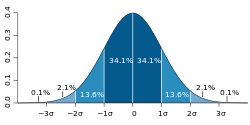
Many naturally occurring phenomena approximate a normal distribution.
Complete requests of other editors on the talk pages of science-related articles (examples)
Expand 2025 in science and/or other articles for science-related topics of the year (in the box on the right)
Create new articles for items of this article, mostly articles relating to new scientific fields/topics/findings (the page does not use redlinks anymore but you will quickly identify possible new articles when reading it; here you can find a version with over 60 redlinked examples)
Some of the lists' items have not yet been integrated into their wikilinked articles; if you add a study there it should also be relevant to at least one other article
Find studies published under a compatible open license (like CC BY 4.0) and upload the studies' images with descriptions from the study and add these images to articles if they are relevant and useful there
When a study with a useful image is published under an incompatible or unclear license (or the image is published not in a study but elsewhere), you could contact its authors (Twitter/Mail) and ask them to give you the permission to upload them under CC BY 4.0 (or whether they could upload the image/s under a compatible license)
You can also think about whether images would be useful as you read a science-related article and then search for such images:
if they already exist add them (if already on WMCommons) or upload them (if the license is ok) or ask their authors for permissions
Nigeria's Senate passes the Endangered Species Conservation and Protection Bill, introducing fines of up to ₦12 million (US$8,250) and prison sentences of up to 10 years for wildlife smuggling and strengthening enforcement against illegal trade in ivory, pangolin scales, and other endangered species. (Reuters)
Snapshot of chain fountain process The chain fountain phenomenon, also known as the Mould effect, self-siphoning beads, or Newton's beads, is a physical phenomenon observed with a chain placed inside a jar. One end of the chain is pulled from the jar and is allowed to fall under the influence of gravity. This process establishes a self-sustaining flow of the chain which rises over the edge and goes down to the floor or ground beneath it, as if being sucked out of the jar by an invisible siphon. For chains with small adjacent beads, the arc can ascend into the air over and above the edge of the jar with a noticeable gap; this gap is greater when the chain falls farther. (Full article...)
Image 6
A plot of normal distribution (or bell-shaped curve) where each band has a width of 1 standard deviation – See also: 68–95–99.7 rule. In statistics, the standard deviation is a measure of the amount of variation of the values of a variable about its mean. A low standard deviation indicates that the values tend to be close to the mean (also called the expected value) of the set, while a high standard deviation indicates that the values are spread out over a wider range. Standard deviation may be abbreviated SD or std dev, and is most commonly represented in mathematical texts and equations by the lowercase Greek letterσ (sigma), for the population standard deviation, or the Latin letters, for the sample standard deviation. (Full article...)
Image 7
Sci-Hub is a shadow library that provides free access to millions of research papers, regardless of copyright, by bypassing publishers' paywalls in various ways. Unlike Library Genesis, it does not provide access to books. Sci-Hub was founded in Kazakhstan by Alexandra Elbakyan in 2011, in response to the rising costs of research papers behind paywalls. The site is extensively used worldwide. In September 2019, the site's operator(s) said that it served approximately 400,000 requests per day. In addition to its intensive use, Sci-Hub stands out among other shadow libraries because of its easy use/reliability and because of the enormous size of its collection; a 2018 study estimated that Sci-Hub provided access to most of the scholarly publications with issued DOI numbers. On 15 July 2022, Sci-Hub reported that its collection comprised 88,343,822 files. Since December 2020, the site has paused uploads due to legal troubles. (Full article...)
Personification of Music by Antonio Franchi, c. 1650 Anthropomorphism (from the Greek words "ánthrōpos" (ἄνθρωπος), meaning "human," and "morphē" (μορφή), meaning "form" or "shape") is the attribution of human form, character, or attributes to non-human entities. It is considered to be an innate tendency of human psychology. Personification is the related attribution of human form and characteristics to abstract concepts such as nations, emotions, and natural forces, such as seasons and weather. Both have ancient roots as storytelling and artistic devices, and most cultures have traditional fables with anthropomorphized animals as characters. People have also routinely attributed human emotions and behavioral traits to wild as well as domesticated animals. (Full article...)





 Featured articles are displayed here, which represent some of the best content on English Wikipedia.


_enhanced.png/250px-The_Rhinoceros_(NGA_1964.8.697)_enhanced.png)


.jpg)


.jpg)
_enhanced.png)


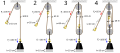 Mechanical advantage device, by Prolineserver (edited by Tomia, Ss181292 and Atropos235) (from Wikipedia:Featured pictures/Sciences/Others)


 Archaeologists prospecting Santa Ana Cave at Excavation (archaeology), by Mario modesto (from Wikipedia:Featured pictures/Sciences/Others)
 Simulation of liquids with different viscosities, by Synapticrelay (from Wikipedia:Featured pictures/Sciences/Others)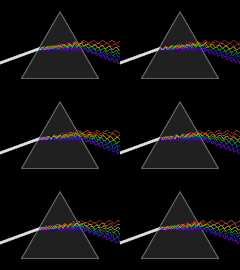
.jpg/120px-Shockwave_pattern_around_a_T-38C_observed_with_Background-Oriented_Schlieren_photography_(1).jpg)

 Translational motion at Thermodynamic temperature, by Greg L (from Wikipedia:Featured pictures/Sciences/Others)
_-_Climate_Lab_Book_(Ed_Hawkins).png/120px-20181204_Warming_stripes_(global%2C_WMO%2C_1850-2018)_-_Climate_Lab_Book_(Ed_Hawkins).png)

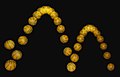 Projectile motion of a bouncing ball at Inelastic collision, by MichaelMaggs (from Wikipedia:Featured pictures/Sciences/Others)
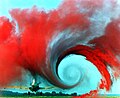 NASA study on wingtip vortices at Wake turbulence, by Langley Research Center (edited by Fir0002) (from Wikipedia:Featured pictures/Sciences/Others)
 Drop impact on a liquid surface, by José Manuel Suárez (from Wikipedia:Featured pictures/Sciences/Others)
 Toroid magnets of the ATLAS detector, by Maximilien Brice, CERN (edited by Bammesk) (from Wikipedia:Featured pictures/Sciences/Others)
 Parallax, by Mila Zinkova (edited by Richard Bartz) (from Wikipedia:Featured pictures/Sciences/Others)
 Vibrating glass beam at Euler–Bernoulli beam theory, by Ben pcc (from Wikipedia:Featured pictures/Sciences/Others)
.png/120px-Diamond_(side_view).png) Color cathodoluminescence of a diamond, by Pavel.Somov (from Wikipedia:Featured pictures/Sciences/Others)
Color cathodoluminescence of a diamond, by Pavel.Somov (from Wikipedia:Featured pictures/Sciences/Others)


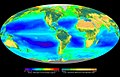 Global oceanic and terrestrial photoautotroph abundance at Primary production, by SeaWiFS Project (from Wikipedia:Featured pictures/Sciences/Others)

 Nobel Prize in Physics diploma, by Sofia Gisberg (restored by Jebulon) (from Wikipedia:Featured pictures/Sciences/Others)
 Section of the Large Hadron Collider, by Maximilien Brice (from Wikipedia:Featured pictures/Sciences/Others)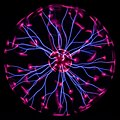
 Animation of a water drop, by Chris 73 and Gmaxwell (from Wikipedia:Featured pictures/Sciences/Others)

 Peruvian Andes at United States Exploring Expedition, by Alfred Thomas Agate (edited by Durova) (from Wikipedia:Featured pictures/Sciences/Others)
 Archaeological excavation at Atapuerca Mountains, by Mario modesto (from Wikipedia:Featured pictures/Sciences/Others)


.jpg)


_-_Climate_Lab_Book_(Ed_Hawkins).png)


.png)


 Vital articles to understand Science.


.svg/40px-Earth_symbol_(bold).svg.png)
.svg/20px-Globus_cruciger_(bold).svg.png)


_-_WGA08164.jpg/250px-Antonio_Franchi_-_Personification_of_Music_(St_Cecilia)_-_WGA08164.jpg)
.svg)
.svg)


_-_WGA08164.jpg)


